One Life, One Heart.
- Shawna Karmes

- Apr 3
- 3 min read
Your heart is the most vital organ in your body. Without your heart, life cannot be sustained. It is responsible for ensuring that all other organs in the body receive blood efficiently. Think of your heart as the engine of a car. Without the engine, the car cannot run. So, what does that mean? We have a responsibility to make sure that the engine within our body is clean and running seamlessly. If the engine in our car is running with dirty oil, you run the risk of causing severe damage to the functionality of your car and thus harming other parts of your car i.e. other organs in your body which leads to more problems or health conditions.
Your heart is connected to a vast network of blood vessels that are responsible for ensuring that organs, tissues and cells receive blood. We call this your vascular system. This system is responsible for ensuring that other organs such as the brain, liver, kidneys, and gastrointestinal tract receive bloody supply quickly and efficiently. If blood cannot get to other organs in your body in a timely manner, tissues and cells of other vital organs can be harmed. For example, if your brain does not receive adequate blood supply, certain health consequences may occur, such as a stroke.

At this point you might be wondering what causes our organs not receive the blood they need. The biggest roadblock is plaque. Plaque is the calcification of fat within the vascular system. This can occur due to tears in the walls of the vessels, caused from high pressure, or because of the buildup of fat deposits within the vessels. A result of
the body no longer having anywhere else to store fat. A health condition known as atherosclerosis caused by high cholesterol also known as hyperlipidemia. The accumulation of plaque within our vasculature, the freeway of our body, slows blood flow just as traffic does. Thus, creating a rise in blood pressure, just like sitting in traffic after a long day of work. This pressure, when not addressed through lifestyle-changes such as diet, exercise, limitation of alcohol consumption and smoking cessation can lead to dependence on medications and additional health conditions such as hypertension (High-blood pressure), Congestive heart failure and heart attacks also known as myocardial infarction.
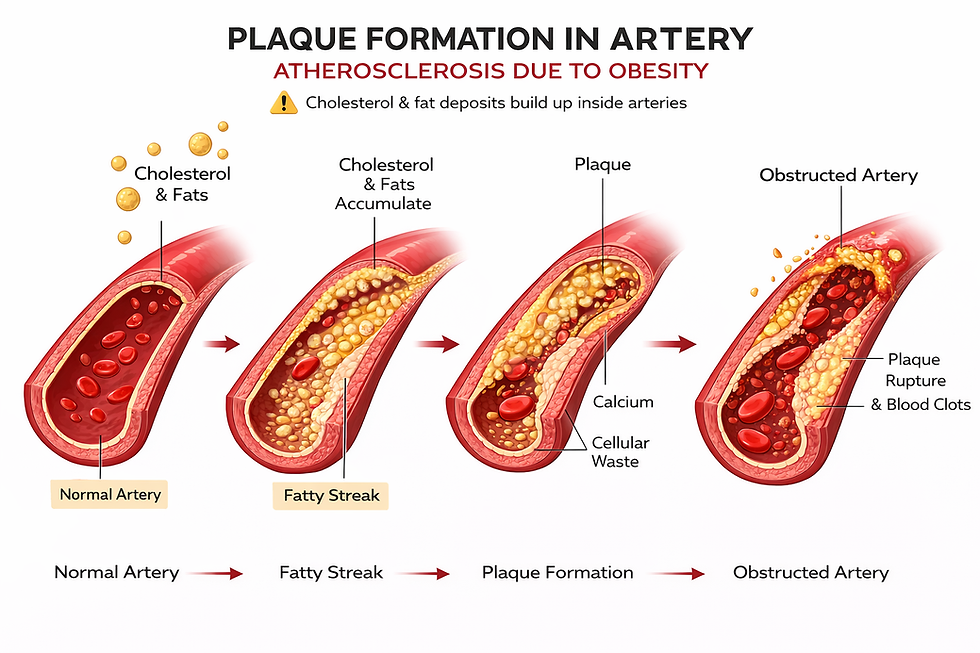
Healthy nutritional decisions and regular exercise are imperative to keeping the highway of your heart clean and optimal for long-term health and disease prevention. Choosing whole foods, reducing consumption of processed foods and sugars can aide the reduction of plaque formation. Regular cardiovascular exercise 5x per week for at least 30-45 minutes can also reduce the development of cardiovascular related disease.

Conquer Challenge:
1. Take yourself out on a fast-paced walk 2x this weekend for at least 30-45 minutes. You want to be breaking a sweat! This is the first step in conditioning your heart to activity. Leading to overall reduction and prevention of cardiovascular disease. The goal is to participate in cardiovascular exercise 5x a week for 30-45 minutes a day.
2. Take inventory of your nutritional habits this week. How much water did you drink? How many times did you eat-out or consume fast-food? How many times did you drink alcohol and/or smoke this week? How can I improve next week? Bring your habits into awareness.
Comments